
The Shape of the Covenant
You don’t have to become Jewish. You can still be righteous before God.
The Torah gives Israel a particular covenant and gives all of humanity a universal one. The one Creator does not ask every person to enter the same people.
01The spark
In Judaism’s own law, a non-Jew has no need to become Jewish in order to live rightly, or to stand close to God. You might expect a faith so sure of its truth to want everyone inside it; the Torah begins somewhere else — with a covenant that already includes everyone.
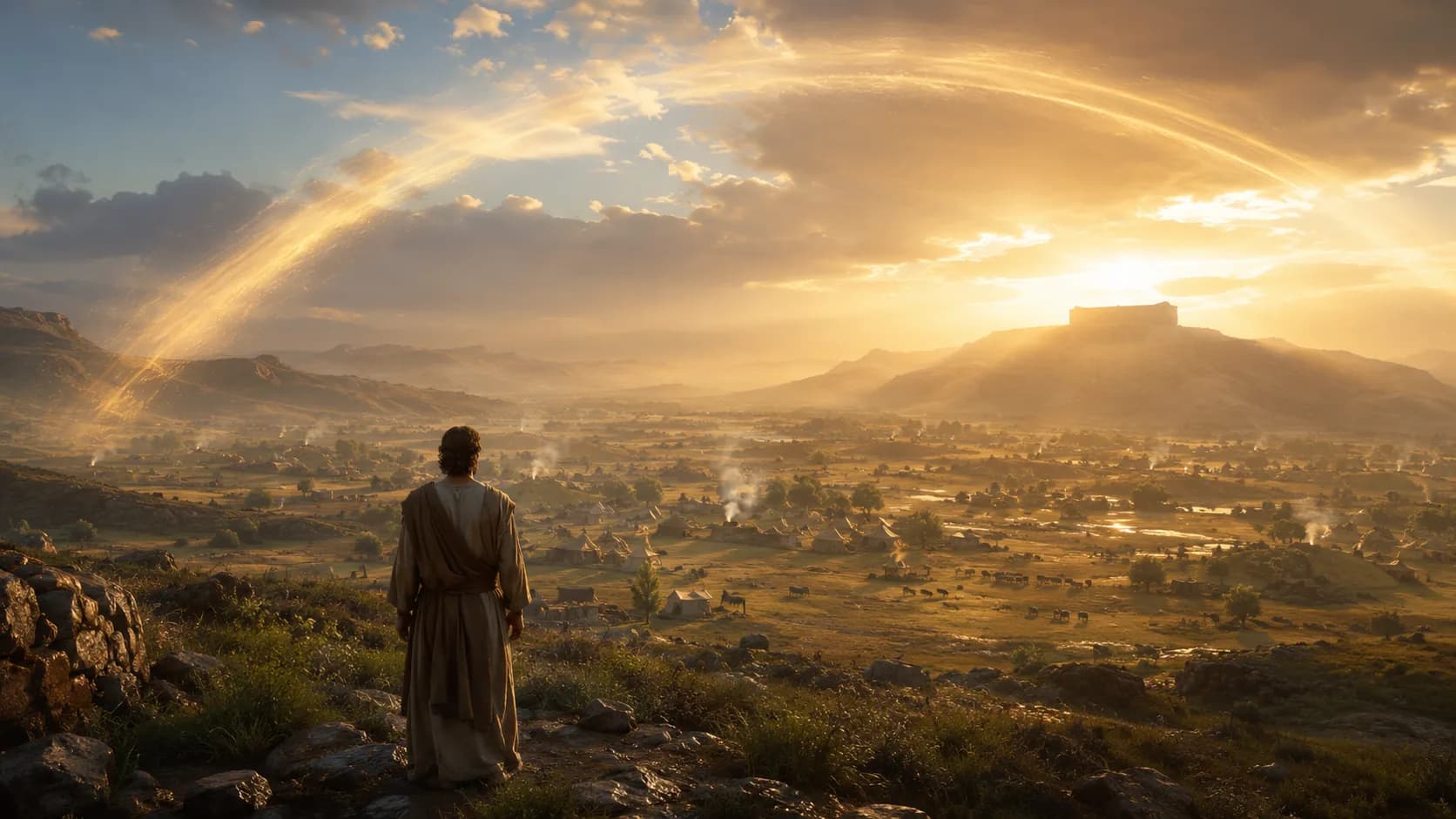
It happens right after the Flood, before there is an Israel to choose. The first covenant in the Torah is not with Abraham: it is with Noah — and through him with “every living soul” that walked out of the ark. That is why the tradition calls humanity “the children of Noah.” The nations are not outsiders to covenant; they are the first ones in it.
What does that covenant ask? The Sages count seven commandments binding the children of Noah, and read together they map a whole human life: two guard how a person stands before God — no idolatry, no cursing His name; two guard the neighbor — no bloodshed, no theft; two guard a person’s own inner world — no sexual degradation, no cruelty to living creatures; and the seventh, the only one phrased as a task, is to establish courts of justice, so that a society carries the other six. Notice how little it scripts: six of the seven say “do not.” The covenant guards the shape of a human life — it does not dictate one way to worship. Not a smaller Judaism, and not a demand that the nations become Israel: a moral floor for human beings as human beings.
Maimonides writes it into law: a gentile who accepts these seven and keeps them carefully is “among the righteous of the nations of the world, and has a share in the World to Come.” One quiet condition carries the depth — he receives them because God commanded them, so the same acts are lived not as private decency but as a bond with the Creator. No conversion, no joining, no becoming someone else. The road Israel walks is its own; the Creator at the end of every road is the same.
This rests on what came before
This rests on the spark before it: that Israel is a covenant people, not a creed the whole world is meant to adopt — so its covenant is one people’s task, never a demand laid on all humanity.
02Where this comes from
In Judaism this isn’t anyone’s opinion. Here are the receipts — look them up.
Genesis 9:6
Whoever sheds human blood, by man shall his blood be shed; for in the image of God He made man.
The original Hebrew
שֹׁפֵךְ דַּם הָאָדָם בָּאָדָם דָּמוֹ יִשָּׁפֵךְ כִּי בְּצֶלֶם אֱלֹהִים עָשָׂה אֶת־הָאָדָם
Go deeper
Right after the Flood, before there is an Israel to choose, God speaks a law to all of humanity — and grounds it in a fact about every human being: whoever sheds human blood answers for it, “for in the image of God He made man.” The first universal commandment rests on the first universal truth: every person, of every nation, bears God’s image. The covenant with the nations is built on human dignity, not on Israel’s election.
Genesis 9:9–10
And I — behold, I establish My covenant with you, and with your seed after you, and with every living soul that is with you.
The original Hebrew
וַאֲנִי הִנְנִי מֵקִים אֶת־בְּרִיתִי אִתְּכֶם וְאֶת־זַרְעֲכֶם אַחֲרֵיכֶם. וְאֵת כׇּל־נֶפֶשׁ הַחַיָּה אֲשֶׁר אִתְּכֶם
Go deeper
The first covenant the Torah records is not with Abraham — it is with Noah, his children, and every creature that left the ark, sealed a few verses later with the rainbow. This is why the tradition names all humanity “the children of Noah”: every nation on earth already stands inside a covenant with God. Israel’s covenant at Sinai comes later, inside this older one — and never replaces it.
Sanhedrin 56a
The children of Noah — all of humanity — were given seven commandments.
The original Hebrew
שֶׁבַע מִצְוֹת נִצְטַוּוּ בְּנֵי נֹחַ
Go deeper
The Sages list the seven: courts of justice, and prohibitions of idolatry, blasphemy, bloodshed, theft, sexual immorality, and eating flesh torn from a living animal — the tradition’s archetype of cruelty to creatures. Read together they cover a whole person: how one stands before God, how one treats one’s neighbor, how one governs one’s own appetites — with courts of justice, the single positive command, holding a society to the rest. A universal moral floor: not a path into Judaism, but a way of living rightly before God as a human being among human beings.
Mishneh Torah, Kings 8:11
Anyone who accepts the seven commandments and is careful to observe them is among the righteous of the nations of the world; and he has a share in the World to Come.
The original Hebrew
כָּל הַמְקַבֵּל שֶׁבַע מִצְוֹת וְנִזְהָר לַעֲשׂוֹתָן הֲרֵי זֶה מֵחֲסִידֵי אֻמּוֹת הָעוֹלָם. וְיֵשׁ לוֹ חֵלֶק לָעוֹלָם הַבָּא
Go deeper
Maimonides turns the universal covenant into law — with one quiet condition: the righteous of the nations keep the seven not merely as good sense but because God commanded them, and that is what turns “do not murder, do not steal” from private decency into a bond with the Creator. The ruling’s last words are worth seeing whole. The common printed text ends “nor of their wise men”; the accurate manuscripts read “but of their wise men” — one who keeps the seven out of reasoned conviction is counted among the wise of the nations, and one who keeps them as God’s command among the righteous. On that reading the tradition honors both — and asks neither to convert.
The chain
From the Torah’s covenant with everyone who left the ark, to the Talmud’s seven commandments for all humanity, to Maimonides’ ruling on the righteous of the nations — open each and see for yourself: the call is to the one Creator, not into Israel.
03The turn
A covenant that doesn’t need you to join it. Israel’s election does not make God tribal — the Torah can give one people a particular task without placing every other life outside it.
04Take it with you
One spark, its sources, ready for the group chat.
You don’t have to become Jewish — you can still be righteous before God.